Grant Objective/Focus:
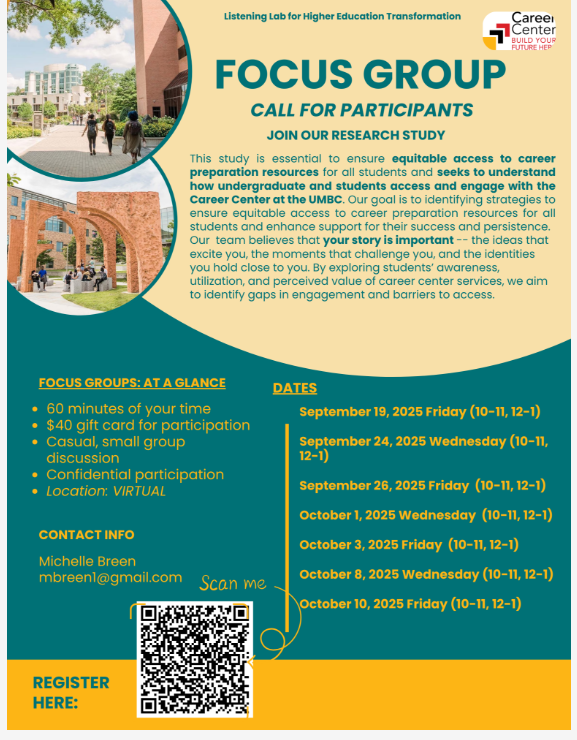
To understand how undergraduate and graduate students are engaging with Career Center resources and services at University of Maryland, Baltimore County.
15 Participating Institutions: ASU, MSU, Purdue, UCR, Utah, GSU, UCF, UMBC, UMass, ISU, NCAT, Buffalo, UNM, VCU, Oregon State, CU Denver, Temple
Grant Timeline
- July-November 2024: UIA initiative planning & campus recruitment
- December 2024: Campuses commit to participating
- January 2025: Campuses select their topic(s) and begin planning their focus groups
- Ongoing: Campuses engage in data collection, analysis, reporting, and advocating for change
- December 2025: All data must be collected
- April 2026: Final campus change reports due
- May 2026: Development of an inventory of student success solutions & campus change strategies
UMBC Project Overview
This study is essential to ensure equitable access to comprehensive career preparation resources for all students, regardless of background or academic discipline. By exploring students’ awareness, utilization, and perceived value of career center services, we aim to identify gaps in engagement and barriers to access. The insights gathered will inform targeted strategies to enhance student outreach, increase participation, and communicate the tangible return on investment (ROI) of engaging with career services (ie. job outcome data and stronger career readiness). Ultimately, this initiative supports our commitment to fostering student success and ensuring every graduate is empowered with the tools and knowledge needed for lifelong professional achievement.
| 📣 Total Number of Focus Groups | 🗣️ Total Number of Participants | 🎧 Total Number of Moderators [UIA trained & trained independently] |
| 6 | 47 | 3 |
Insights from Listening to Students
Overarching themes/student needs:
- Awareness and Communication: Students consistently learn about the Career Center through orientation, classroom announcements, and emails, but they prefer visual, social, and in-person communication methods over digital overload. Many find emails overwhelming and request clearer, more consistent, and accessible messaging (including SMS alerts or text-to-speech options). Sustained awareness beyond orientation is needed to maintain engagement throughout the semester.
- Tailored, Inclusive, and Accessible Support: Participants emphasized a need for major-specific and identity-conscious career guidance, particularly for humanities, arts, international, and commuter students. They seek targeted resources—such as customized resume examples, interview prep by field, and discipline-based networking opportunities—to make the Career Center feel more inclusive and relevant to all majors.
- Career Readiness and Confidence Building: Many students feel overwhelmed by career preparation tasks like networking and internship applications. They value structured, step-by-step tools (e.g., resume reviews, MBTI assessments, micro-credentials) that make the process more manageable and help them build confidence in articulating their skills and qualifications.
- Experiential and Applied Learning Opportunities: Students highlighted the importance of hands-on learning—internships, research, workshops, guest speakers, and peer-led sessions—to bridge classroom learning with workforce skills. Early exposure (starting sophomore year) to these experiences strengthens their understanding of career paths and increases readiness for post-graduation opportunities.
- Event Design, Engagement, and Supportive Culture: Students appreciate the Career Center’s welcoming and supportive environment, yet event logistics and timing often limit participation. They recommend better scheduling, hybrid options, and physical signage to encourage attendance. In-person engagement and peer-to-peer interactions (like Career Peers) help students feel more comfortable accessing services and sustain trust in the Career Center’s role as a reliable partner in career development.